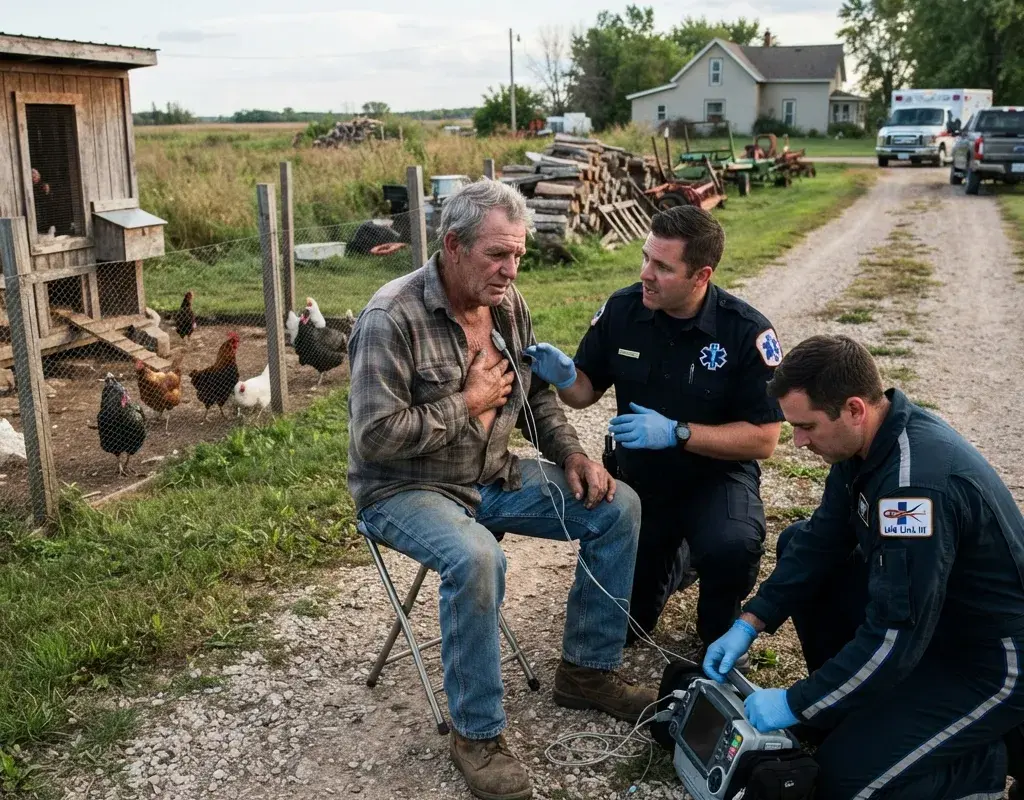
Richard Wiedemann spent thirty seven years working grueling shifts making animal feed, dreaming of a quiet retirement on thirty eight acres south of McGregor. His sanctuary was filled with turkeys, owls, and the peace of nature, but that tranquility was shattered on September 17 when a routine afternoon of clearing stumps turned into a fight for survival. While resting by his chicken coop, Wiedemann felt a twisting sensation in his chest that he initially tried to ignore, unaware that he was suffering a massive heart attack with a total arterial blockage.
The road to recovery required a seamless relay of care between several organizations, starting at Riverwood Healthcare Center in Aitkin and ending at Essentia Health St. Joseph’s Medical Center in Brainerd. The situation became dire quickly; during the crisis, Wiedemann coded five times. His wife, Laurel, recalled the intensity of the moment as fifteen medical professionals rushed down the hallway in response to a code blue. Though the rescue efforts were aggressive enough to crack his ribs, Wiedemann says he has never been more grateful for such rough treatment because it ultimately brought him back to life.
Returning to the hospital recently for National Rural Health Day provided an emotional full circle for Wiedemann as he reunited with the staff who saved him. His experience serves as a living testament to why accessible critical care is vital for those living outside major metropolitan hubs. With roughly one in five people residing in areas classified as rural from a healthcare perspective, many face daunting hurdles like provider shortages and long transport times that can make the difference between life and death in cardiac emergencies.
To mark the occasion and strengthen regional safety nets, officials from Essentia Health hosted mayors from Baxter, Brainerd, and Crosslake for a tour of their cardiovascular unit. As part of an initiative to expand emergency responses beyond hospital walls, each mayor received an automated external defibrillator to donate to a local business or community organization. For Wiedemann, who now spends his days walking more and swapping habits for healthier snacks during Vikings games, these resources are more than just equipment; they represent the essential infrastructure that allows rural residents to age safely in their own homes.