
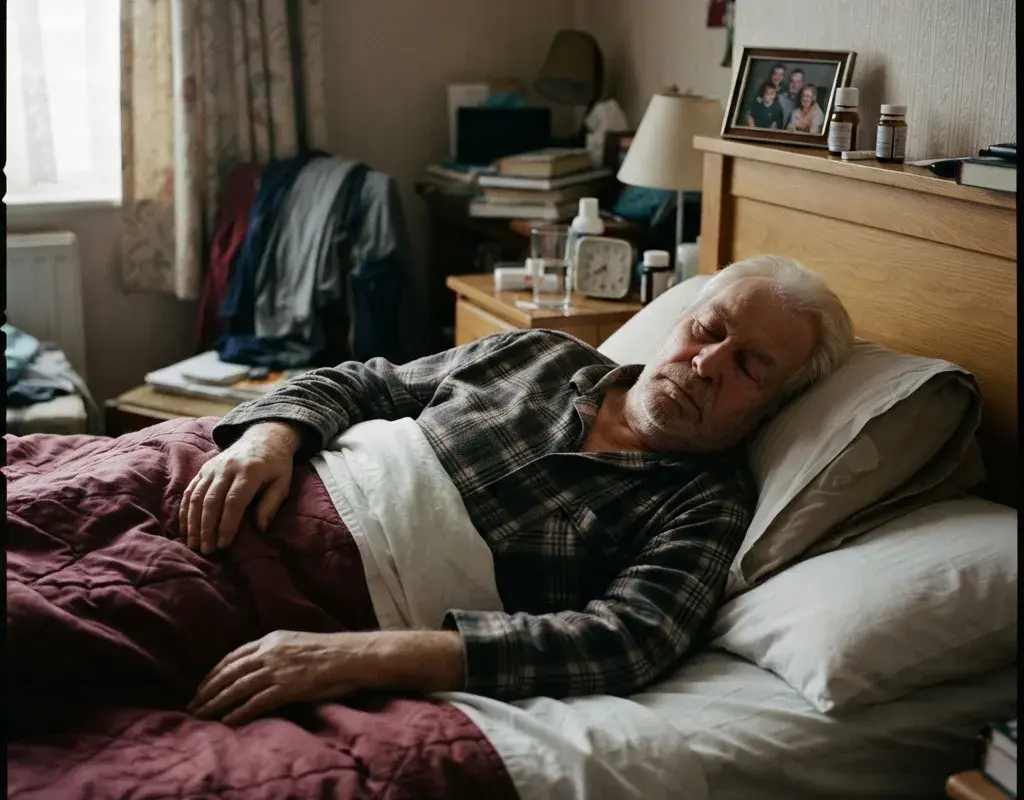
For most people, catching up on sleep feels like a luxury, but for those living with heart disease, spending too much time in bed might be a warning sign. A recent study published in the journal PLOS One suggests that adults with existing heart conditions who sleep nine or more hours per night face a significantly higher risk of death compared to those who stick to a window of seven to eight hours. According to the research, which tracked over three thousand participants over roughly fifteen years, long sleepers saw an increased mortality risk of about fifty percent across both heart related and non heart related causes.
While the numbers seem alarming, medical experts caution against viewing excessive sleep as the direct cause of death. Because the study is observational, it identifies a correlation rather than a clear cause and effect relationship. Dr. Antony Chu, a cardiologist at Brown University, notes that there isn’t necessarily a known biological mechanism where extra sleep damages the heart. Instead, he suggests that longer sleep durations often act as a red flag for other underlying issues such as worsening heart failure, severe anemia, depression, or complications from sedating medications.
The study did adjust for various lifestyle factors including smoking habits, alcohol consumption and body mass index to ensure accuracy. Interestingly, while short sleep cycles showed some early links to mortality in basic models, those connections faded once health adjustments were made. This highlights the complex balance of rest and recovery for cardiac patients, though specialists emphasize that these findings apply specifically to those already diagnosed with heart disease and shouldn’t be extrapolated to the general public.
Ultimately, healthcare providers encourage patients to look beyond just the clock when evaluating their rest. Registered dietitian Erin Palinski-Wade explains that since sleep influences critical markers like blood pressure and inflammation, any drastic shift in patterns should be discussed with a physician. Rather than obsessing over total hours, patients are encouraged to monitor how rested they actually feel and treat sudden bouts of hypersomnia as a prompt for further medical screening.